
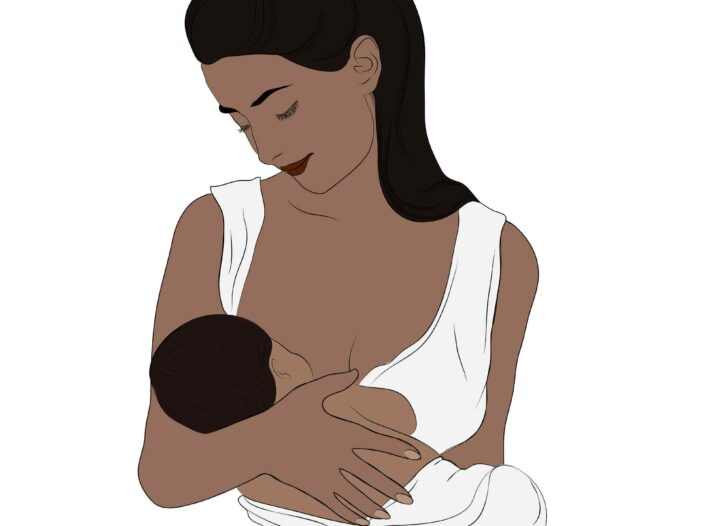
When I first started breastfeeding, one of the biggest surprises was how much the way I held my baby affected the entire experience.
In the early days, feeding didn’t always feel natural right away. Sometimes it felt awkward, and I remember wondering whether I was doing something wrong when my baby seemed fussy or when a feeding didn’t go smoothly.
Over time I realized that small adjustments in how I positioned my baby often made feeding feel easier. Simply trying a different position sometimes changed the entire experience.
Every baby is different, and every parent eventually finds the positions that feel most comfortable for them. During the newborn stage, I experimented with several different holds before settling into the ones that worked best for us.
Here are five breastfeeding positions I remember trying during those early weeks.
Quick Guide to Breastfeeding Positions
Some of the most commonly used breastfeeding positions include:
• Cradle hold
• Cross-cradle hold
• Football hold
• Laid-back breastfeeding
• Side-lying position
Each one feels a little different, and I found that certain positions worked better depending on the situation. Sometimes the time of day, how sleepy my baby was, or how comfortable I felt in a chair made a difference.
Why Breastfeeding Position Can Make a Difference
One thing I quickly discovered was that comfort matters for both parent and baby.
Newborns are small and still developing strength and coordination. Because of that, how you hold your baby can influence how relaxed both of you feel during feeding.
During the early weeks, I also realized that feeding a newborn can take time. When I found a position where my back and arms felt supported, feeding sessions felt much calmer.
Sometimes the smallest adjustments helped. Adding a pillow, leaning back slightly, or shifting my baby’s body closer to mine occasionally made feeding feel easier.
Eventually I became more relaxed about experimenting with different positions until something felt right in the moment.
1. Cradle Hold
The cradle hold is probably the breastfeeding position most people picture.
In this position, the baby rests across your chest with their head supported in the bend of your elbow on the same side as the breast you are using.
Your forearm supports your baby’s back while your hand supports their lower body.
I remember using this position more often as my baby grew a little stronger. At that point it started to feel natural and comfortable for both of us.
2. Cross-Cradle Hold
The cross-cradle hold is similar to the cradle hold but uses the opposite arm to support the baby.
For example, if the baby is feeding from the left breast, the right arm supports the baby’s head and body.
I used this position frequently during the earliest weeks because it allowed me to support my baby’s head more directly. When everything was still new, that extra support helped me feel more confident while feeding.
3. Football Hold
The football hold places the baby beside your body rather than across your lap.
Your baby’s legs extend behind you while their head rests near the breast.
I remember trying this position when I wanted to see my baby more clearly during feeding. Being able to look directly at my baby’s face helped me feel more relaxed in the early days.
Using a pillow beside me sometimes made this position easier to maintain for longer feedings.
4. Laid-Back Breastfeeding
Laid-back breastfeeding was one of the most relaxing positions I tried.
In this position, I would lean back slightly while my baby rested against my chest tummy-to-tummy.
Instead of feeling like I had to manage every detail of positioning, this approach sometimes allowed feeding to feel calmer and more natural. Some of my quietest newborn moments happened while feeding this way.
5. Side-Lying Position
The side-lying position allows both parent and baby to lie on their sides facing one another.
This position felt especially appealing during nighttime feedings when I was exhausted and wanted to rest while feeding my baby.
Once breastfeeding felt more established, this position sometimes made overnight feedings feel less disruptive.
Finding the Position That Works for You
One of the things I learned quickly is that there isn’t just one way to breastfeed.
During the newborn stage I tried several different positions before discovering which ones felt most comfortable. Some positions worked better during certain times of the day, while others felt easier as my baby grew stronger.
Over time breastfeeding began to feel more familiar, and what once felt uncertain gradually became part of the everyday rhythm of caring for a baby.
A Quick Note About Safety
If you feed your baby while lying down, it is safest to return your baby to a crib, bassinet, or other separate sleep space afterward. Pediatric safety guidelines generally recommend avoiding bed-sharing because of the risk of accidental suffocation.