
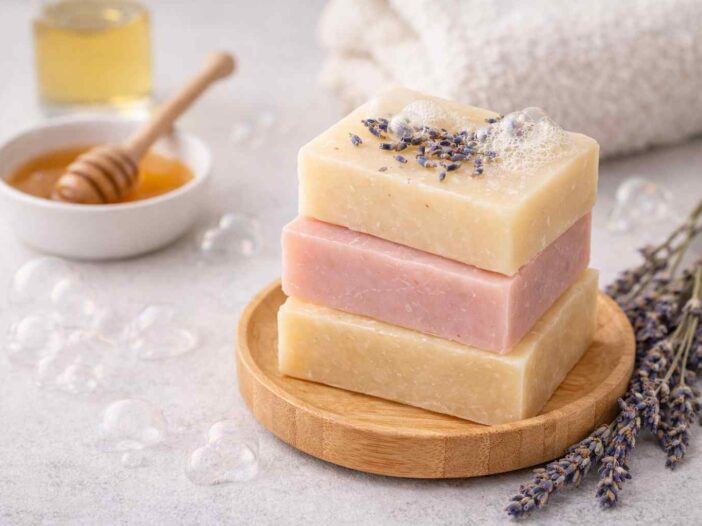
Breast milk soap is a gentle, nourishing soap made using breast milk instead of distilled water. This is a great way to use extra milk that might otherwise go to waste.
This simple no-lye breast milk soap recipe uses melt-and-pour soap base, making it safe and beginner-friendly. The result is a creamy soap that lathers well and leaves skin feeling soft and clean.
Why I Started Making Breast Milk Soap
My youngest child spent his first two weeks of life in the NICU, so I pumped around the clock—every two to three hours—to establish my supply.
Thankfully he latched like a champ the day before we took him home, and he has been breastfeeding well ever since.
Fast forward about five months and I realized I had quite a stash of frozen breast milk. He occasionally takes a bottle when I need to be away for a few hours, but most of the time he gets his milk directly from the tap.
What really hurts is when milk sits in the refrigerator a little too long and has to be thrown away. For many breastfeeding moms, pouring breast milk down the drain feels heartbreaking.
That’s when I started looking for creative ways to use extra milk, and I discovered breast milk soap.
According to La Leche League International, human breast milk may help support healing and skin health.
DIY Breast Milk Soap
Breast milk soap has become a popular DIY project among breastfeeding parents who have small amounts of milk they cannot use for feeding.
Breast milk naturally contains fats and other components that give it a rich, creamy texture. When added to homemade soap, those ingredients can contribute to a gentle bar that many people enjoy using as part of a simple skincare routine.
Some people experiment with breast milk soap on areas of dry or sensitive skin or include it in a baby’s bath routine.
Common situations where people may choose to try breast milk soap include:
• dry skin
• diaper area irritation
• baby acne
• mild skin sensitivity
Because every baby’s skin is different, reactions can vary. When trying any new soap or skincare product, it can be helpful to start with a small amount and watch for signs of irritation. And if a child has persistent or severe skin concerns, a pediatrician or dermatologist can help recommend appropriate care.
Easy No-Lye Breast Milk Soap Recipe
This simple four-step method creates a creamy soap that lathers beautifully.
Ingredients
• ½ pound melt-and-pour soap base
• 1 cup room-temperature breast milk
• silicone soap molds
Optional ingredients:
• oatmeal
• honey
• essential oils
• vitamin E oil
Step 1: Melt the Soap Base
Cut about ½ pound of soap base into small cubes.
Place the cubes in a microwave-safe container and heat in 15-second increments, stirring between each round.
Heating gradually helps prevent bubbles and overheating.
Step 2: Add Breast Milk
Once the soap base is melted, slowly stir in 1 cup of room-temperature breast milk.
Mix thoroughly until the milk and soap base are fully blended.
Step 3: Pour Into Molds
Pour the mixture into silicone soap molds.
Silicone molds make it easy to remove the soap once it hardens.
You can use simple rectangle molds, heart molds, or fun shapes for kids.
Step 4: Let the Soap Harden
Place the molds in the refrigerator for 2–3 hours until the soap fully solidifies.
Once hardened, remove the bars from the molds.
Your breast milk soap is now ready to use.
Best Soap Bases for Breast Milk Soap
Melt-and-pour soap bases are ideal for beginners because they eliminate the need to work with lye.
Popular options include:
- clear glycerin soap base
- white glycerin soap base
- oatmeal soap base
- shea butter soap base
Each base produces slightly different textures and moisturizing properties.
Optional Ingredients to Enhance Your Soap
Once you learn the basic recipe, you can experiment with natural ingredients.
Oatmeal
Oatmeal provides gentle exfoliation and can help soothe irritated skin.
Honey
Honey adds moisture and can help create a softer bar of soap.
Coffee Grounds
Coffee grounds create an exfoliating soap and provide a natural coffee aroma.
Essential Oils
Essential oils can add fragrance.
Popular options include:
- lavender (relaxing)
- lemon or lemongrass (refreshing)
- grapefruit or orange (uplifting)
When making soap for babies, many parents prefer to keep it fragrance-free.
Breast Milk Soap for Babies
Many parents make breast milk soap specifically for their babies. Because the soap contains natural fats and nutrients, it is often used as a gentle alternative to store-bought soaps. However, every baby’s skin is different. If irritation occurs, then discontinue use.
Tips for Making Breast Milk Soap Successfully
A few simple tips can help your soap turn out better:
• use room-temperature milk to prevent curdling
• heat the soap base slowly
• stir thoroughly before pouring
• allow the soap to cool completely before removing it from molds
These small steps help create smoother, more attractive soap bars.
Other Creative Uses for Extra Breast Milk
If you have extra milk that can’t be used for feeding, there are several creative options.
Some parents use breast milk for:
- breast milk baths
- breast milk lotion
- breast milk jewelry
- homemade skincare products
These ideas allow moms to use milk that might otherwise go to waste.
Breast milk represents an enormous amount of time, dedication, and love.
Finding creative ways to use extra milk can feel incredibly rewarding—especially when that milk might otherwise be discarded.
Breast milk soap is one simple way to turn “liquid gold” into something beautiful and useful.
Have you ever made breast milk soap? I’d love to hear how it turned out.