
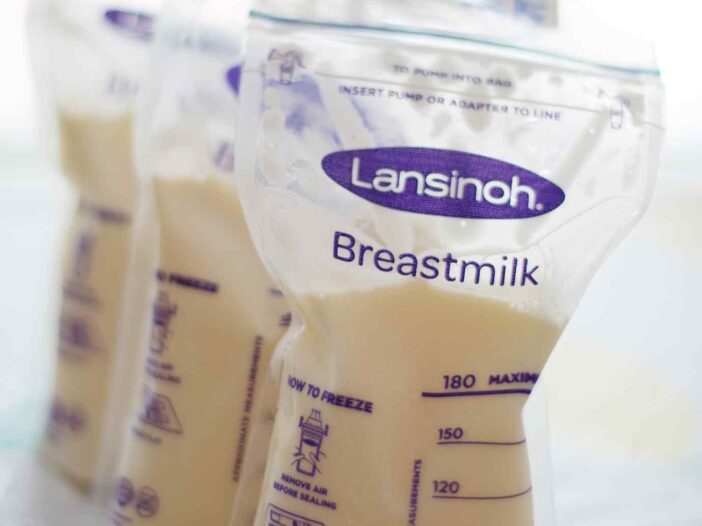
When you start breastfeeding, you will quickly discover that pumped milk is precious. Each ounce often represents time, effort, and patience. So when a bottle sits on the counter or a bag of milk reaches the back of the freezer, many parents find themselves wondering the same thing: Is this milk still safe to use?
Questions about breast milk storage are incredibly common. Unlike formula, which has straightforward preparation rules, breast milk storage depends on where the milk has been kept and how it has been handled. Milk that was freshly pumped may last several hours at room temperature, while milk stored in a freezer can remain usable for months.
Understanding these guidelines helps parents make confident decisions about stored milk and reduces the stress that often comes with pumping and storing a supply.
Breast Milk Storage Guidelines (Quick Reference)
The following table summarizes commonly recommended storage timeframes for expressed breast milk.
| Storage Location | How Long Breast Milk Lasts |
|---|---|
| Room temperature (77°F / 25°C or cooler) | Up to 4 hours |
| Insulated cooler with ice packs | Up to 24 hours |
| Refrigerator | Up to 4 days |
| Freezer compartment inside refrigerator | About 6 months (best quality) |
| Deep freezer | Up to 12 months |
| Thawed breast milk in refrigerator | Up to 24 hours |
| Warmed breast milk | Use within 2 hours |
These guidelines are widely recommended by pediatric and breastfeeding organizations to help ensure breast milk remains safe and nutritious for babies.
Why Breast Milk Storage Guidelines Exist
Breast milk is remarkably resilient, but like any food, it can eventually support bacterial growth if stored too long or at the wrong temperature.
Freshly expressed milk contains natural antimicrobial properties that help slow the growth of bacteria. This is one reason breast milk can safely remain at room temperature longer than many other foods.
Cooling milk slows bacterial growth further. Refrigeration preserves milk for several days, while freezing allows milk to be stored for months.
Freezing does gradually change some components of breast milk, particularly certain immune cells and enzymes. However, frozen breast milk still remains highly nutritious and beneficial for babies.
These storage timelines exist to balance safety and nutrition, helping parents use expressed milk confidently while minimizing risk.
How Long Freshly Pumped Breast Milk Lasts
Freshly expressed breast milk can typically remain at room temperature for up to four hours, as long as the room is not excessively warm.
For many parents, this guideline is especially helpful during busy mornings or nighttime feedings. Milk that was pumped recently can often remain on the counter for a short period before being refrigerated or used.
However, cooler environments help preserve milk longer. If the room temperature is especially warm, it may be safer to refrigerate milk sooner.
Many mothers find it easiest to place pumped milk in the refrigerator shortly after pumping if it will not be used immediately.
How Long Breast Milk Lasts in the Refrigerator
Breast milk stored in a refrigerator can typically remain safe for up to four days.
Refrigeration slows bacterial growth while preserving the nutritional and immune properties of the milk. Many families store milk in sealed bottles or specialized milk storage bags designed for refrigeration and freezing.
Placing milk toward the back of the refrigerator—where temperatures remain more stable—can help preserve quality. Refrigerator doors tend to experience more temperature fluctuations due to frequent opening and closing.
For parents building a small milk stash, labeling milk with the date it was pumped can help ensure older milk is used first.
How Long Breast Milk Lasts in the Freezer
Freezing allows breast milk to be stored much longer than refrigeration.
Milk stored in a standard freezer compartment inside a refrigerator is often best used within six months for optimal quality. Milk stored in a deep freezer can remain usable for up to twelve months, although many families prefer to use it sooner.
Freezing preserves milk effectively, though it may slightly reduce certain immune properties over time. Even so, frozen breast milk continues to provide excellent nutrition for babies.
Many mothers choose to freeze milk in small portions, such as two to four ounces, so that only the amount needed for a feeding must be thawed.
How Long Thawed Breast Milk Lasts
Once frozen milk has been thawed, the storage timeline changes.
Thawed breast milk can typically remain in the refrigerator for up to twenty-four hours. After that period, the milk should be discarded if it has not been used.
Milk that has been warmed for feeding should generally be used within two hours.
It is also important to note that thawed milk should not be refrozen. Once milk has been thawed, the freezing process should not be repeated.
Common Breast Milk Storage Questions
Parents often encounter real-life situations that do not fit neatly into a storage chart. The following questions are among the most common.
Can you reuse leftover breast milk from a bottle?
If a baby has already begun drinking from a bottle, bacteria from the baby’s mouth may enter the milk. Because of this, leftover milk from a feeding is typically recommended to be used within about two hours.
Can breast milk sit out overnight?
Milk that has remained at room temperature for longer than recommended storage guidelines should generally be discarded.
Can you reheat breast milk twice?
Reheating milk multiple times can increase bacterial growth and reduce quality. Most guidance suggests warming only the amount of milk needed for a feeding.
How long can breast milk stay in a cooler bag?
Milk stored in an insulated cooler with ice packs can usually remain safe for up to twenty-four hours, making this option helpful for travel or workdays away from home.
Tips for Storing Breast Milk Safely
Many mothers find that a few simple habits make breast milk storage easier and more organized.
Labeling milk with the date it was pumped helps ensure that older milk is used first. Rotating milk from the freezer stash regularly prevents milk from remaining frozen longer than intended.
Storing milk in small portions can also reduce waste, since babies may not always finish larger bottles.
Finally, placing milk in the back of the refrigerator or freezer helps maintain a consistent temperature, preserving quality.
What to Do With Breast Milk That Can’t Be Used for Feeding
Occasionally, stored milk may exceed recommended storage timelines or thaw unexpectedly. When that happens, many parents feel discouraged about discarding something that required so much effort to produce.
Some families choose to repurpose older milk rather than throw it away. Milk that is no longer suitable for feeding may still be used in milk baths, where it can help soothe sensitive skin.
Others use older milk to make homemade breast milk soap, a creative project that transforms leftover milk into a gentle skin-care product.
You can learn more in these guides:
- What to Do With Leftover Breast Milk
- How to Make Breast Milk Soap
These options help ensure that milk that can no longer be consumed may still serve a useful purpose.
A Reassuring Note for Parents
For many breastfeeding mothers, throwing away milk can feel surprisingly emotional. Each ounce may represent time spent pumping, organizing storage bags, and planning ahead for feedings.
It can help to remember that breastfeeding is a long journey, and occasional waste is almost inevitable. Milk that nourished your baby—even for a single feeding—already served an important purpose.
Learning how long breast milk lasts simply helps families make informed decisions and manage their milk supply with confidence.
Breastfeeding rarely unfolds exactly as expected, but understanding the basics of milk storage can make the process far less stressful.