
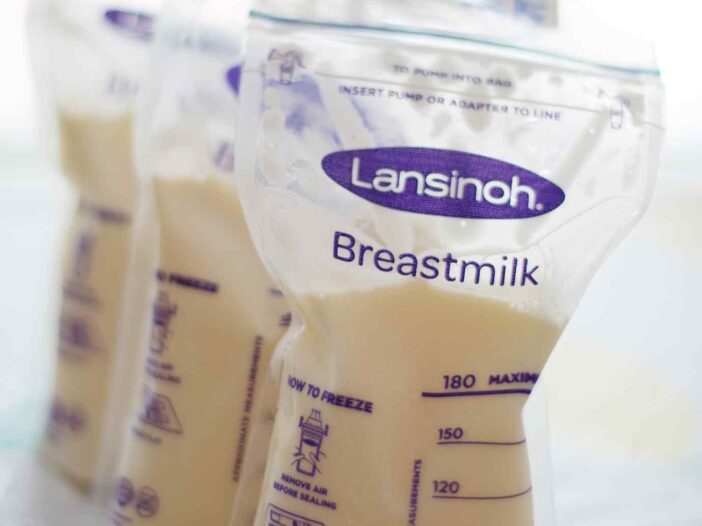
When I first started pumping milk, one of the questions I kept running into was what to do with a bottle that had already been warmed.
Sometimes my baby only drank part of the bottle. Other times I warmed milk and then got distracted before the feeding started.
One of the questions I kept running into while pumping was whether breast milk can be reheated after a bottle has already been warmed.
While looking into breast milk storage guidelines, I learned that the answer depends on the situation.
In general, breast milk is usually warmed once for feeding. Repeatedly reheating the same milk is typically avoided.
Understanding the reasoning behind these recommendations helped me feel much more confident handling stored milk.
If you ever have concerns about feeding or milk storage, a pediatrician or lactation professional can provide guidance specific to your situation.
Can Breast Milk Be Reheated More Than Once?
The short answer I came across while researching breast milk storage is this:
Breast milk is typically warmed once for feeding.
If a baby begins drinking from the bottle, many storage guidelines suggest using the milk within about two hours. After that point, the remaining milk is often discarded rather than reheated again.
Learning this guideline helped me understand why many parents try to warm only the amount of milk needed for a feeding.
Why Reheating Breast Milk Is Limited
When I started reading more about breast milk storage, I learned that breast milk naturally contains protective properties that help slow bacterial growth.
However, once milk is expressed and handled outside the body, those protections gradually decrease.
Warming milk raises the temperature, and warmer environments can allow bacteria to grow more quickly. If a bottle has also been in contact with a baby’s mouth, additional bacteria may be introduced during the feeding.
Because of these factors, repeatedly warming the same milk is generally discouraged in many storage recommendations.
Understanding that reasoning helped the guidelines make more sense to me.
What to Do if Your Baby Doesn’t Finish a Bottle of Breast Milk
One of the situations I ran into frequently was my baby leaving a small amount of milk in the bottle.
After reading about common storage recommendations, I learned that many parents keep the bottle available for a short period of time in case the baby becomes hungry again.
After roughly a couple of hours, the remaining milk is often discarded or used for a breast milk project rather than reheated again.
To reduce waste, I eventually started preparing bottles with smaller portions of milk. If my baby still seemed hungry, I could always warm more.
Can Breast Milk Be Warmed Again If It Cools Down?
Another question I had was whether milk could be warmed again if it had already been warmed but the baby had not yet started drinking.
From what I learned while reading storage guidelines, some parents choose to warm milk again once if the baby has not yet fed from the bottle.
However, repeated warming cycles are generally avoided because they may affect both milk quality and safety.
Preparing smaller bottles helped me avoid needing to reheat milk in most situations.
How to Warm Breast Milk Safely
When warming breast milk, I found that gentle warming methods were usually recommended.
Many parents place the bottle in a bowl of warm water or use a bottle warmer designed for breast milk. These methods warm the milk gradually.
Microwaving breast milk is generally avoided because it can create uneven heating and may affect some components of the milk.
After warming, gently swirling the bottle can help distribute the heat more evenly.
How Reheating Fits Into Breast Milk Storage
QueMy questions about reheating milk eventually led me to learn more about breast milk storage overall.
Common questions that often come up include:
- How long breast milk lasts in the refrigerator
- How long thawed breast milk lasts
- How long warmed milk can sit out
If you want to explore those topics further, these guides explain them in more detail:
How Long Breast Milk Lasts
Breast Milk Storage Guidelines
A Strategy That Helped Me Reduce Milk Waste
Because breast milk takes so much time and effort to pump, I always hated the idea of throwing any away.
One small strategy that helped was preparing smaller bottles at first. If my baby finished the bottle and still seemed hungry, I could always warm additional milk.
Over time, I also started to learn my baby’s typical feeding amounts, which made preparing bottles easier.
A Reassuring Thought
Breastfeeding and pumping involve a lot of work, and it can feel frustrating when milk has to be discarded after a feeding.
What helped me was remembering that occasional waste happens to nearly everyone who pumps milk. Babies’ appetites can change from feeding to feeding, and even careful planning cannot prevent every unexpected situation.
Learning how to store and handle milk simply helps parents manage their milk supply with a little more confidence.
And every ounce that nourished your baby already served an important purpose.